DEMANS: DEMentia in Ankara and the Nature of Surroundings: Homes, outdoor green spaces, and neighbourhoods as urban landscapes of well-being and care: DEMANS24-26
Proposal Marie Skłodowska-Curie Actions Fellowship Application – HORIZONMSCA-2023-PF-01. Funded by European Research Executive Agency (ERA).
Bilkent University Project Coordinator: Yasemin Afacan, Professor, Bilkent University Department of Interior Architecture and Environmental Design
Main Proposer: Meghann Catherine Ward, Poastdoctoral Fellow, Bilkent University Department of Interior Architecture and Environmental Design.
Duration: 2024-2026
Investigation of Indoor Daylight Variations in Educational Buildings and Chronotype Characteristics of Generation Z Individuals from a Neuromimetic Architectural Perspective
TÜBİTAK ARDEB Project: 125K876 (1001)
Principle Investigator: Yasemin Afacan, Professor, Bilkent University Department of Interior Architecture and Environmental Design
Researchers: Vedia Durmaz, Ph.D. Student, Bilkent University Department of Interior Architecture and Environmental Design; Ayşen Burcu Ürgen, Asst. Prof., Bilkent University UMRAM.
Duration: September 2025-September 2028
Investigation of the Effect of Vegetation Structure in Urban Parks on Microclimate and Thermal Comfort
TÜBİTAK 1002 Short Term Support Module Application
Advisor: Yasemin Afacan, Professor, Bilkent University Department of Interior Architecture and Environmental Design
Principle Investigator: Betül Gündoğdu, Ph.D. Student, Bilkent University Department of Interior Architecture and Environmental Design
Duration: September 2025-September 2026
Itinerant Narratives and Cities
MAX PLANCK PARTNER GROUP (Bibliotheca Hertziana & Bilkent University)
Project scope:
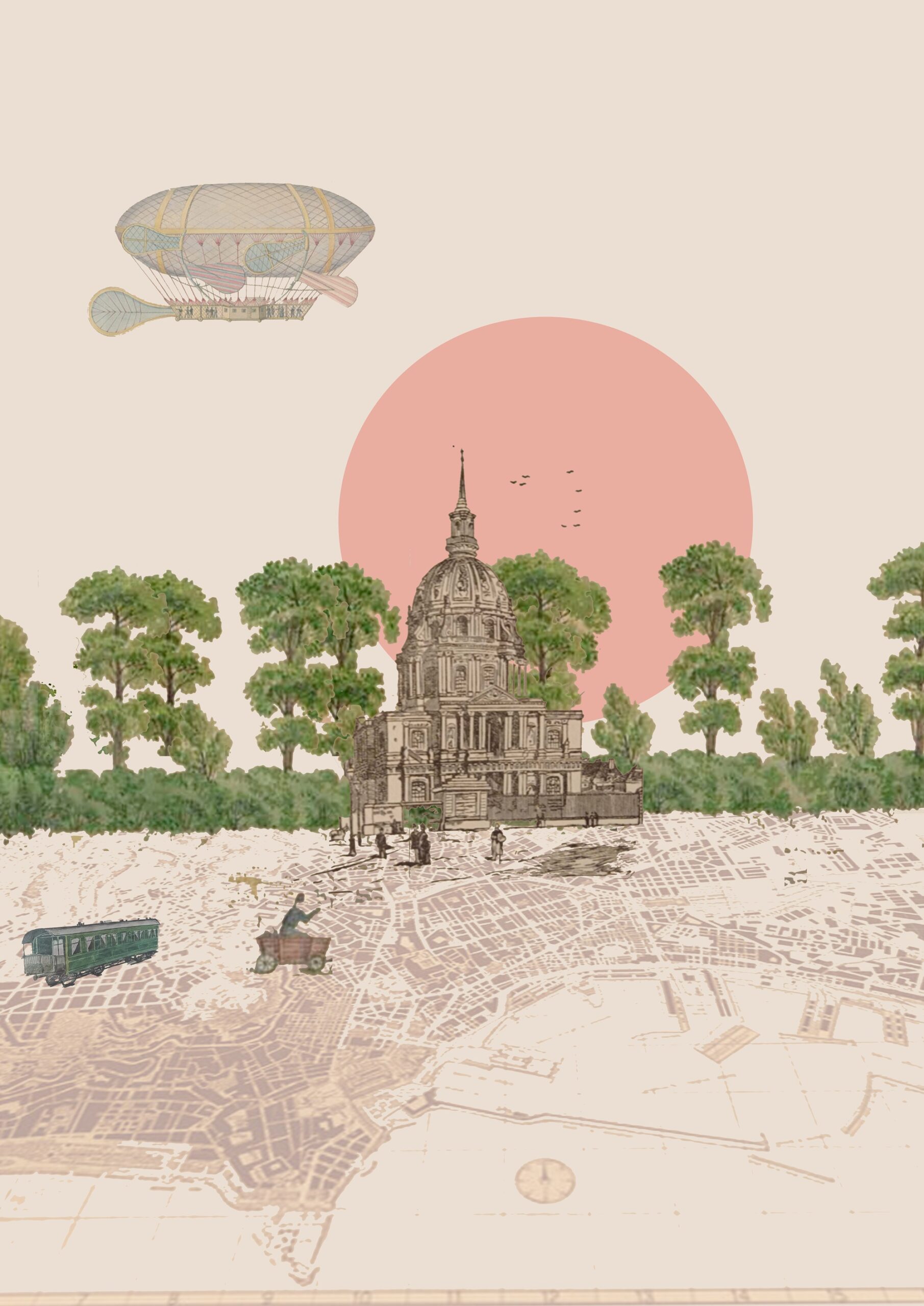
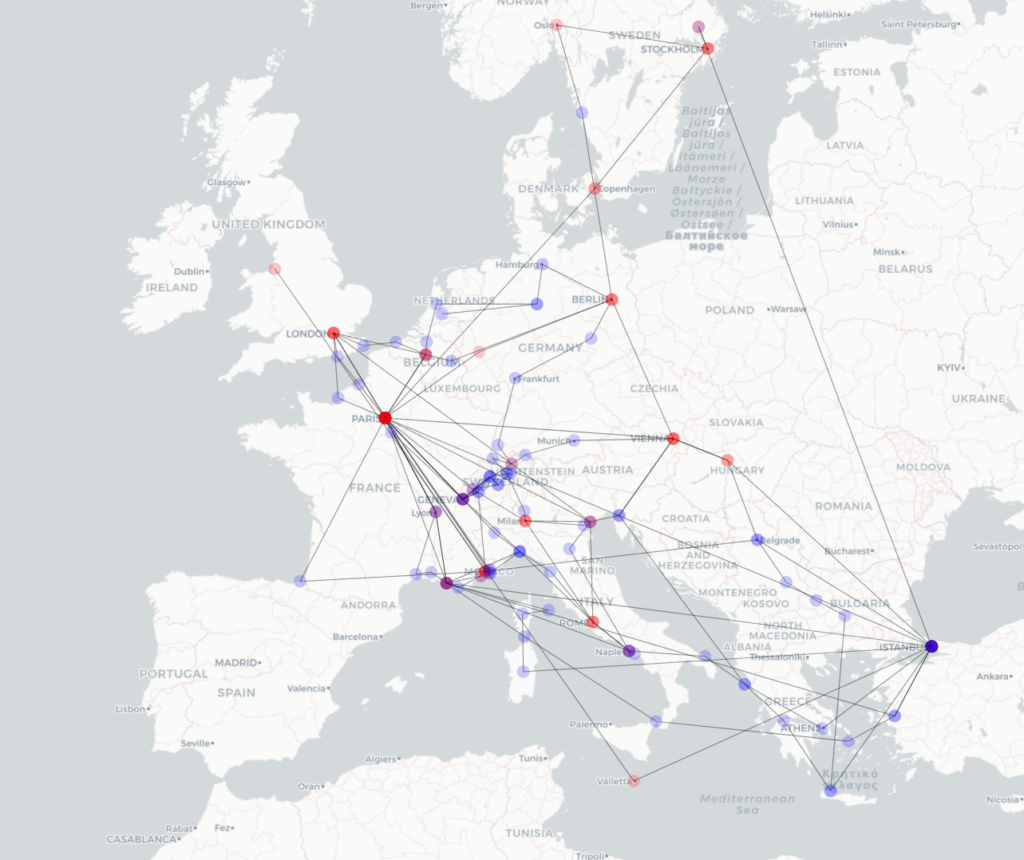
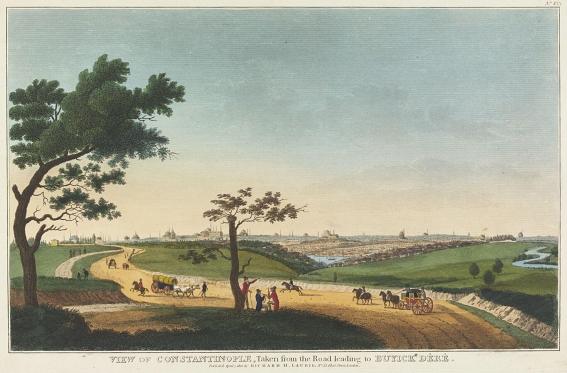
This project investigaties how cities are explored and represented thus constructed through travel literature since the early modern period. The corpus of urban imagery in travelogues published in Western Eurasia through the era of Grand Tour has a pivotal importance as a shift from earlier forms of urban imaginations, which in turn is a product of great urban transformations that marked these centuries. Nevertheless, literary and visual genres of topographic views and cartographical techniques from preceding centuries such as nautical charts, portolan maps, panoramic views, or miniatures have impacts on the modes of exploring, viewing, and picturing cities even to the present day. The materiality and object qualities of urban images as well as intermedial transitions across geographies and periods still shapes our urban perceptions. On the other hand, travel guidebooks are replete with chronological representation of progress and glorious histories. The poetics of vision in Naples, Antioch, or in Vienna, their natural and architectural iconography, the self- imagery of polities and urbanites were influential in creating the episteme of urban representations. Against this background, Itinerant Narratives and Cities discusses the interdependent nature of these agents in shaping cities regarding respective empires, nations, and identities. Mediterranean and Levant cities are identified as the area of special interest in terms of geography but more importantly as sites of encounters. Itinerant Narratives and Cities pays particular attention on the transformative era of travel and print culture thoughout the nineteenth century.
Project Manager: Semra Horuz
Partners: Bibliotheca Hertziana, Max Planck Institute for Art History, Rome (BHMPI)
Duration: 5 years
-
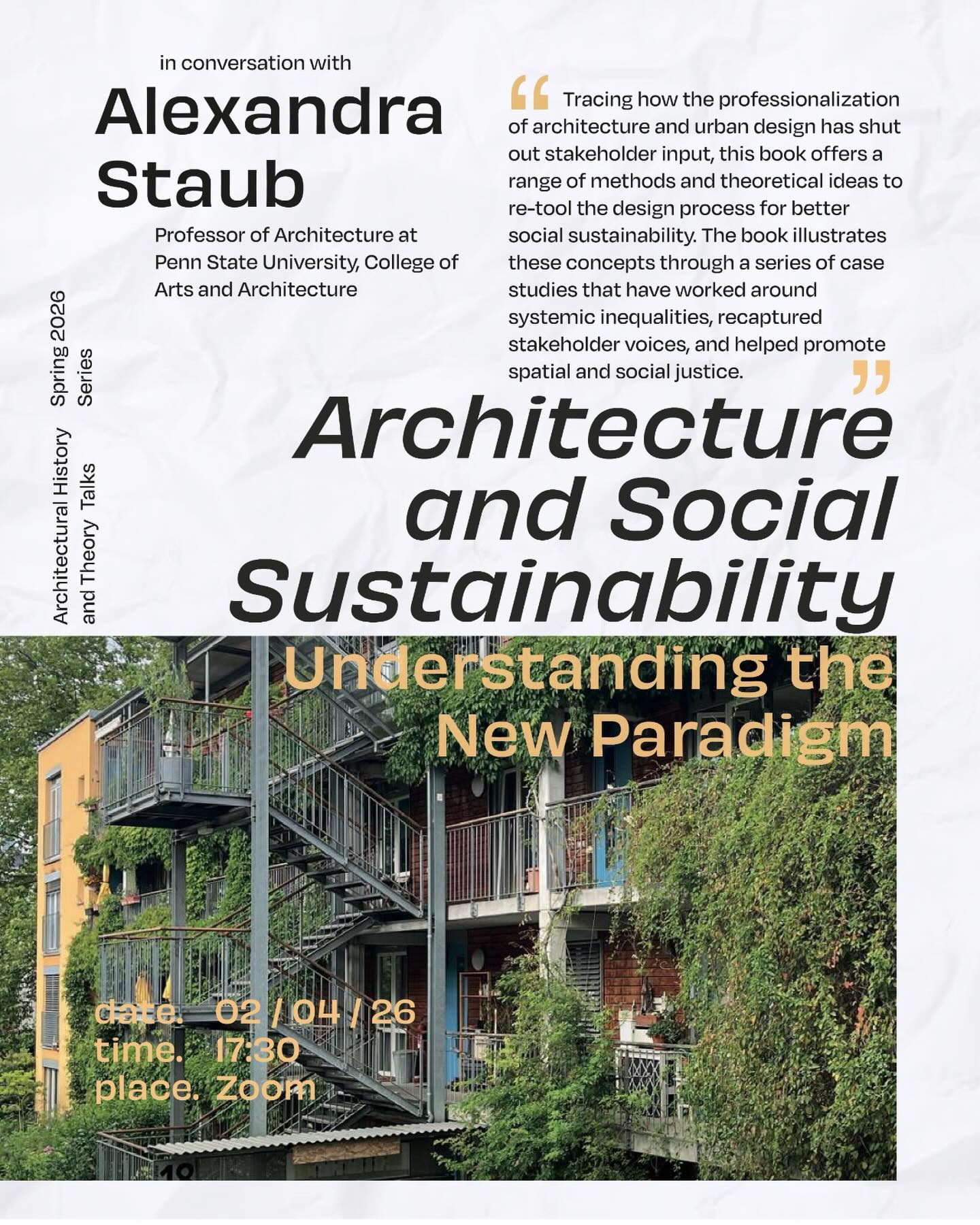
Book Talk: “Architecture and Social Sustainability: Understanding The New Paradigm” in conversation with Alexandra Staub
2026 Spring Architectural History and Theory Talks will hold its second installment in 2026 Spring semester with Alexandra Staub, professor of architecture at Penn State University, College of Arts and Architecture, for a book talk titled “Architecture and Sustainability: Understanding the New Paradigm” on April 2nd, 2026, Thursday at 17:30. The talk series is organized…
-
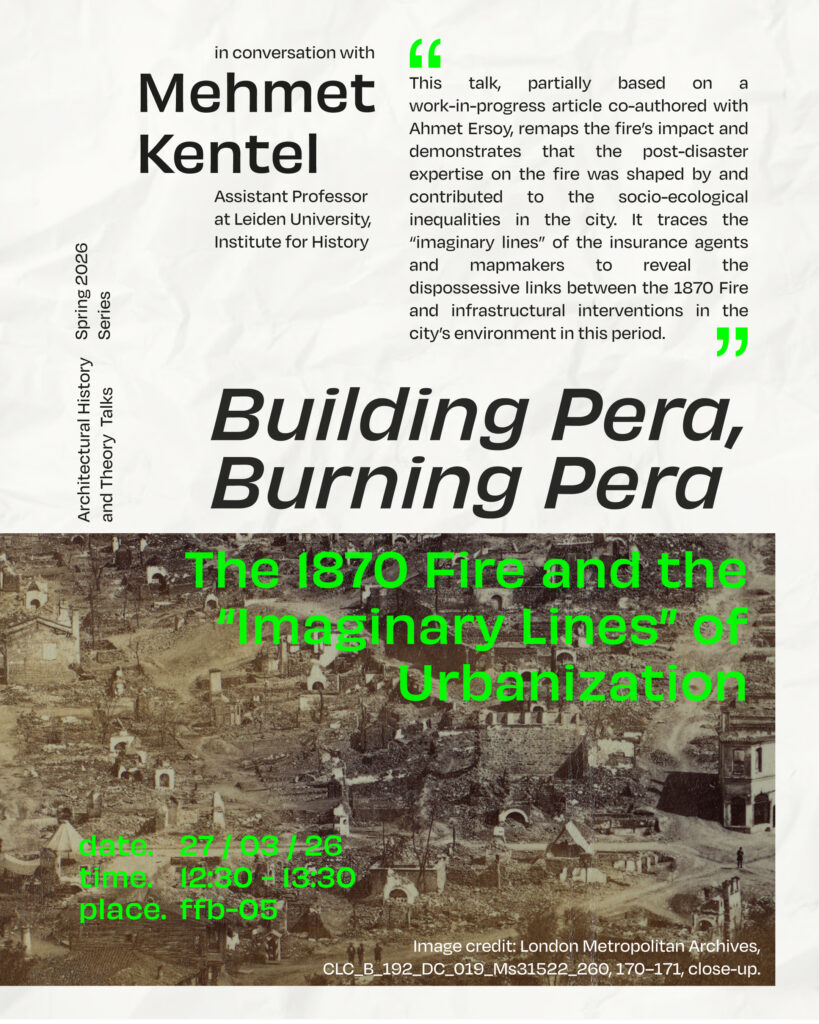
Talk: “Building Pera, Burning Pera: The 1870 Fire and the “Imaginary Lines” of Urbanization” by Mehmet Kentel
2026 Spring Architectural History and Theory Talks will begin with K. Mehmet Kentel’s lecture “Building Pera, Burning Pera: The 1870 Fire and the “Imaginary Lines” of Urbanization”, in March 27, 2026, Friday, at 12:30 in FFB-05. The talk series is organized by Aslıhan Günhan (Architecture) and Semra Horuz (IAED). On 5 June 1870, the heart…
Research for a socio-economic and environmental decision support model for implementation of whole life zero carbon office buildings in Turkiye
TÜBİTAK ARDEB PROJECT: 124K940 (1001)
Project scope:
In this project, office buildings that can respond to the multiple crises will be examined with a sustainability approach and socio-economic and environmental factors for the implementation of lifetime zero carbon buildings will be identified. The aim is to develop a decision support model for achieving best practices in nZEBs. The highest performing (EPC class A) buildings in Turkiye will be identified and the baseline scenarios will be analyzed from environmental and economic perspectives using the life cycle assessment (LCA) and life cycle costing (LCC) method. For social impact assessment, qualitative data will be collected through interviews with constructors, users and decision makers. The analysis of the current situation will reveal the best construction methods being applied in different climatic zones in Turkey. These construction methods will be combined with other applications in the literature to form a database for a decision support model.
At the end of the study, a multi-layered decision support model will be created for buildings to reach Turkey’s zero carbon target. It is supposed that the results of the study will support the Ministry of Environment, Urbanization and Climate Change of the Republic of Turkiye in the future recasting of the nZEB definition. The results will be disseminated in a wider geography through the international research group “IEA EBC TCP Annex 89 – Implementing net-zero emission buildings – Ways to implementation of whole life cycle-based net zero greenhouse gas emission in buildings”.
Project Manager: N. Cihan Kayaçetin, Assistant Professor, Bilkent University. Partners: Çankaya University, Necmettin Erbakan University, Kadır Has University
Duration: 36 months
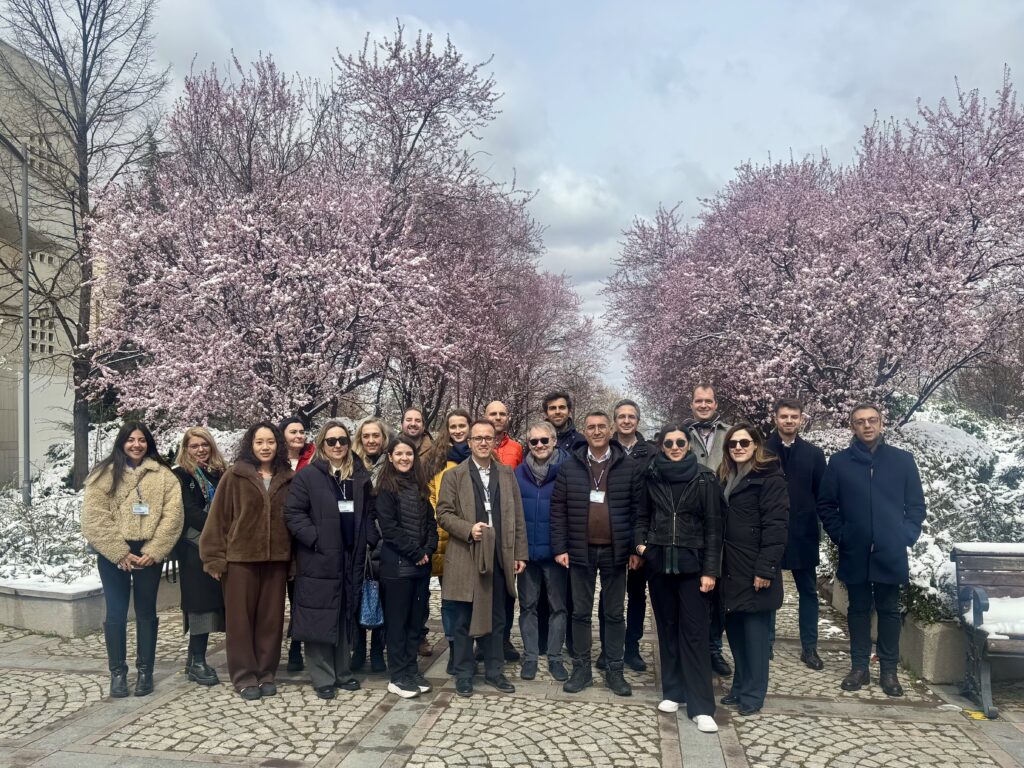
Urban-CoLLaR: Co-creating Urban Living Labs for Circular Regenerative Neighbourhoods
https://dutpartnership.eu/projects/urban-collar
https://urban-collar.snspa.ro/
Horizon Europe – Driving Urban Transitions (DUT) TÜBİTAK UPAG: 224N048 (1071)
The project aims to accelerate the application of circular solutions in regenerative urban renewal projects at the neighbourhood level, supporting the transition towards a carbon-neutral and circular building stock by 2050 as promoted by the European (EU) Renovation Wave strategy and Circular Economy Action Plan. The project adopts a multilayer approach to frame the availability of environmental resources (e.g. energy, materials, water, etc.) and socio-economic resources (e.g. cultural heritage, local employment, etc.) that characterize a neighbourhood, in turn developing appropriate solutions to increase the recirculation of such resources for urban regeneration. A decision-making instrument will be developed to help municipalities and developers tackle circularity in urban renewal projects, from the analysis of the urban context to the design and implementation of environmental and socio-economic solutions. A multi-stakeholder co-creation approach will be integrated into the decision-making instrument and urban living labs (ULL) will be organized to ensure the participation of key stakeholders. The decision-making instrument will be tested and validated through case studies provided by the consortium focusing on social housing and public spaces. The ULL will take advantage of the diversity of case studies provided by the consortium in terms of geographical locations, urban context, and stakeholder ecosystems.
Project team (Bilkent): N. Cihan Kayaçetin (Coordinator); Yasemin Afacan (Researcher); Duygu Aral (Scholar – PhD from İYTE); Usman Riaz (Scholar – MFA(c) Bilkent IAED)
Duration: January 2025 – December 2027
Project coordinator: Bilkent University
-
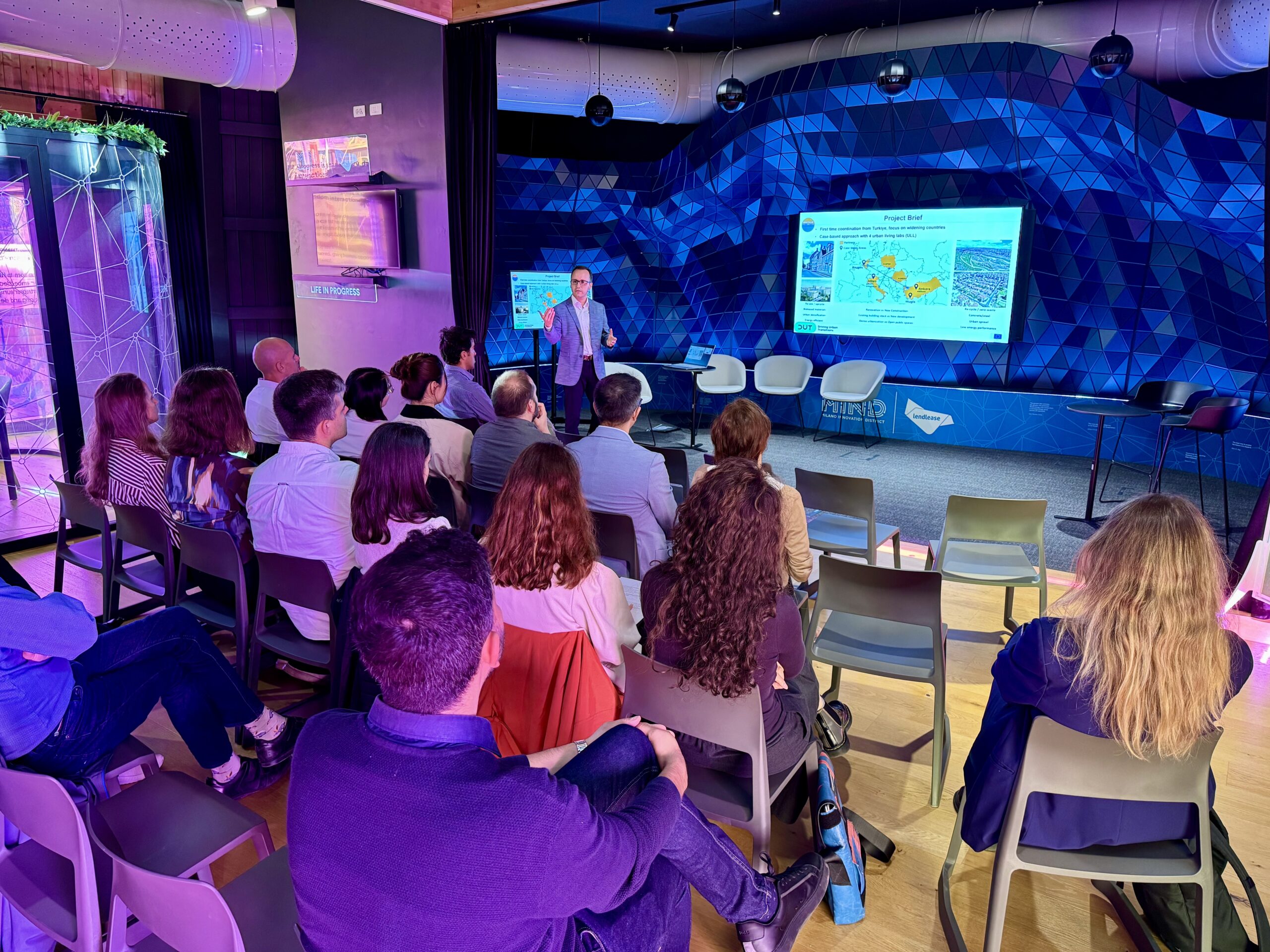
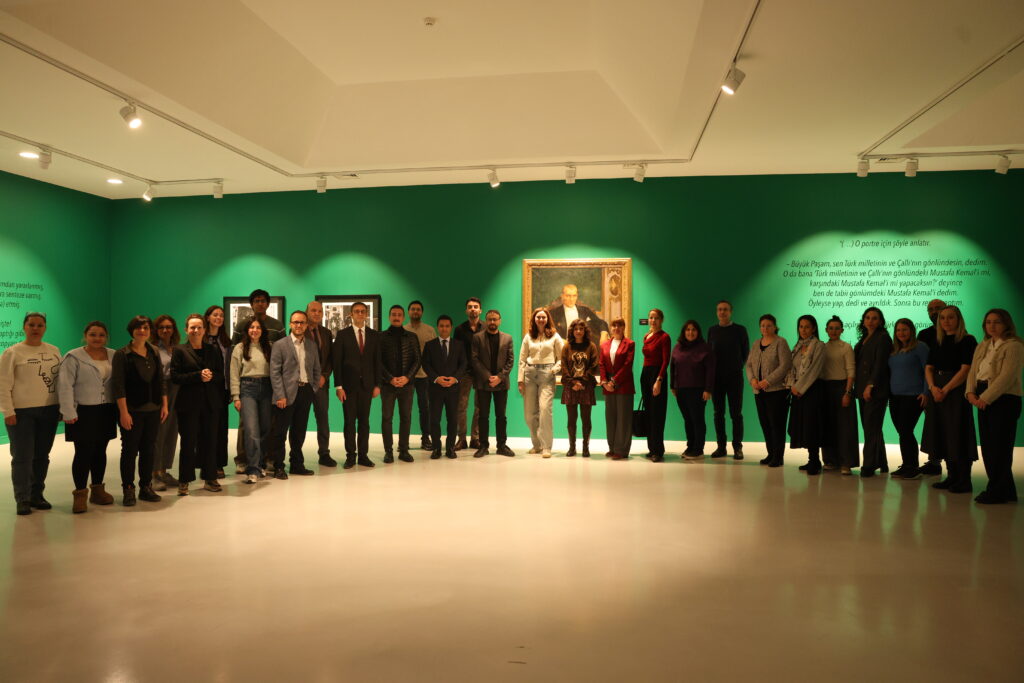
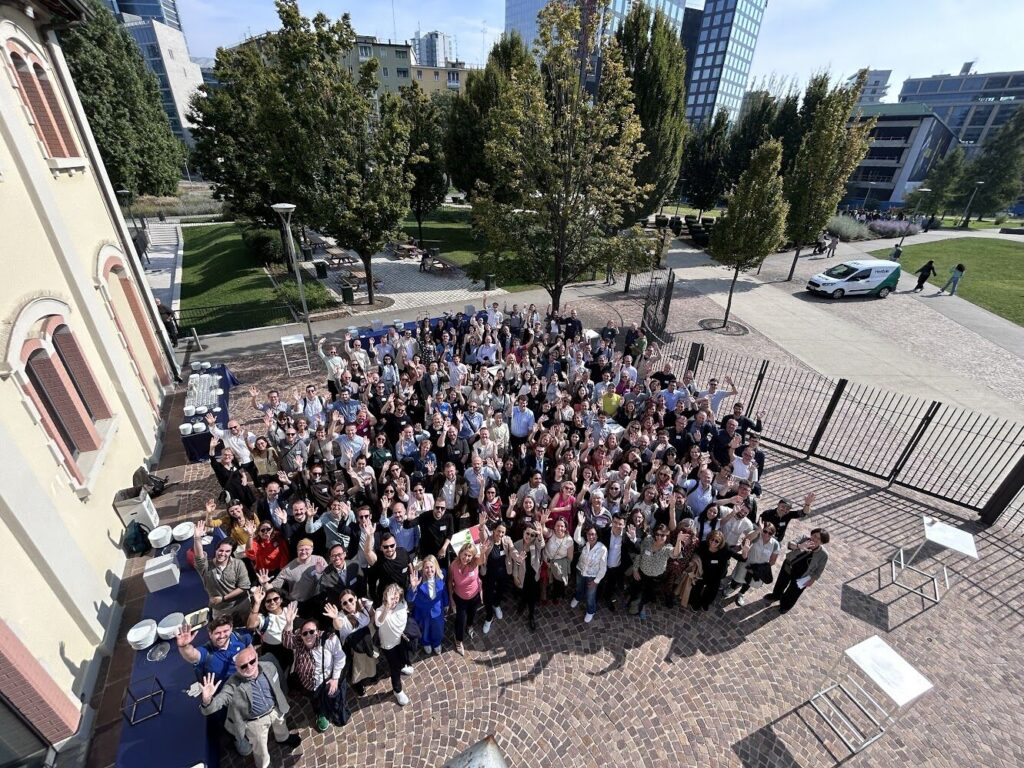
Urban-CoLLaR in TÜBİTAK DUT National Info Day & DUT Projects 2025 Event
Asst. Prof. Nuri Cihan Kayaçetin from our department has represented the Urban-CoLLaR project at national and International events over the last two weeks! He was invited as a guest speaker by TÜBİTAK to the National Info-day of Driving Urban Transitions (DUT) 2025 call on September 18th to share his leading experiences as the first-time coordinator…