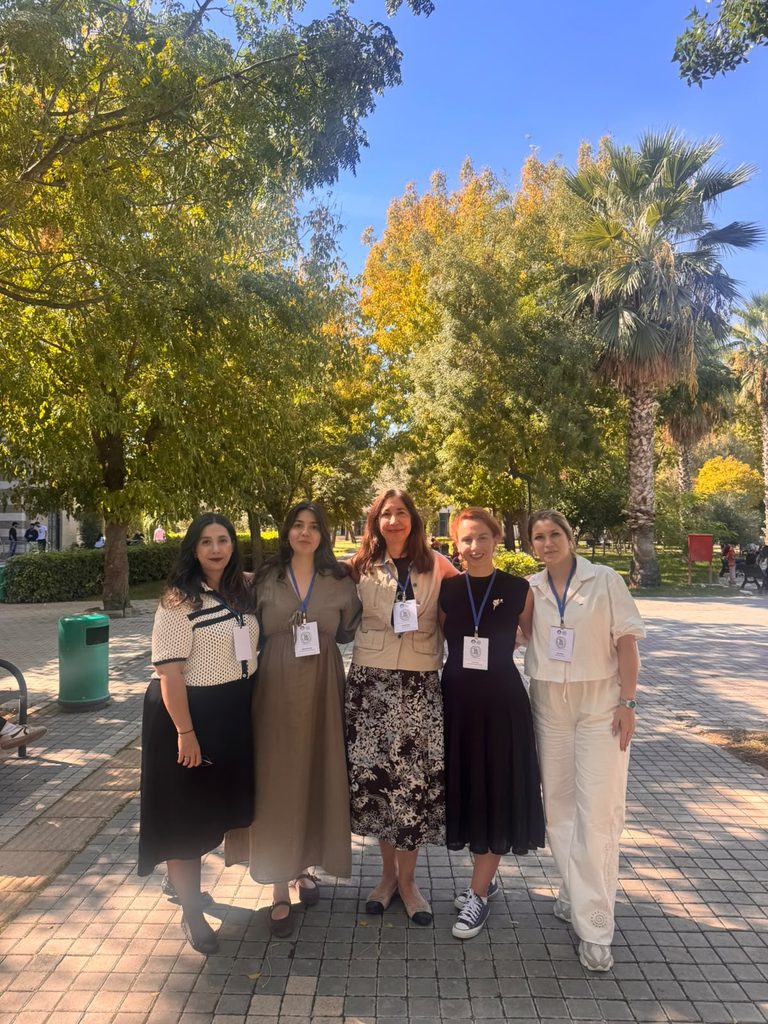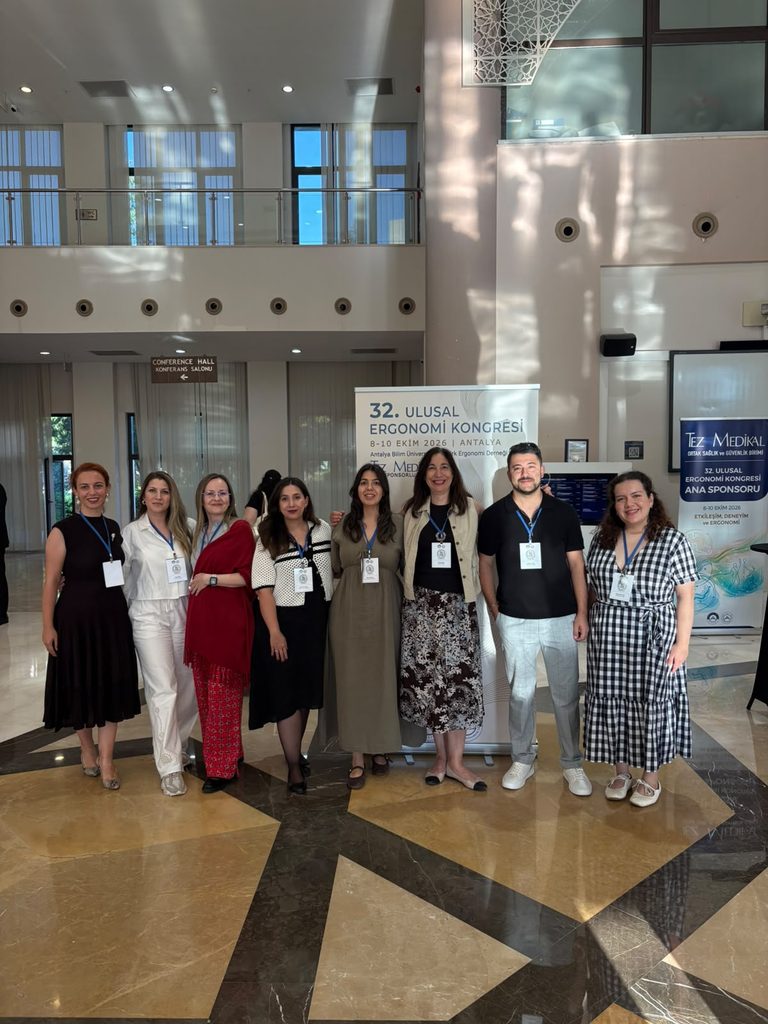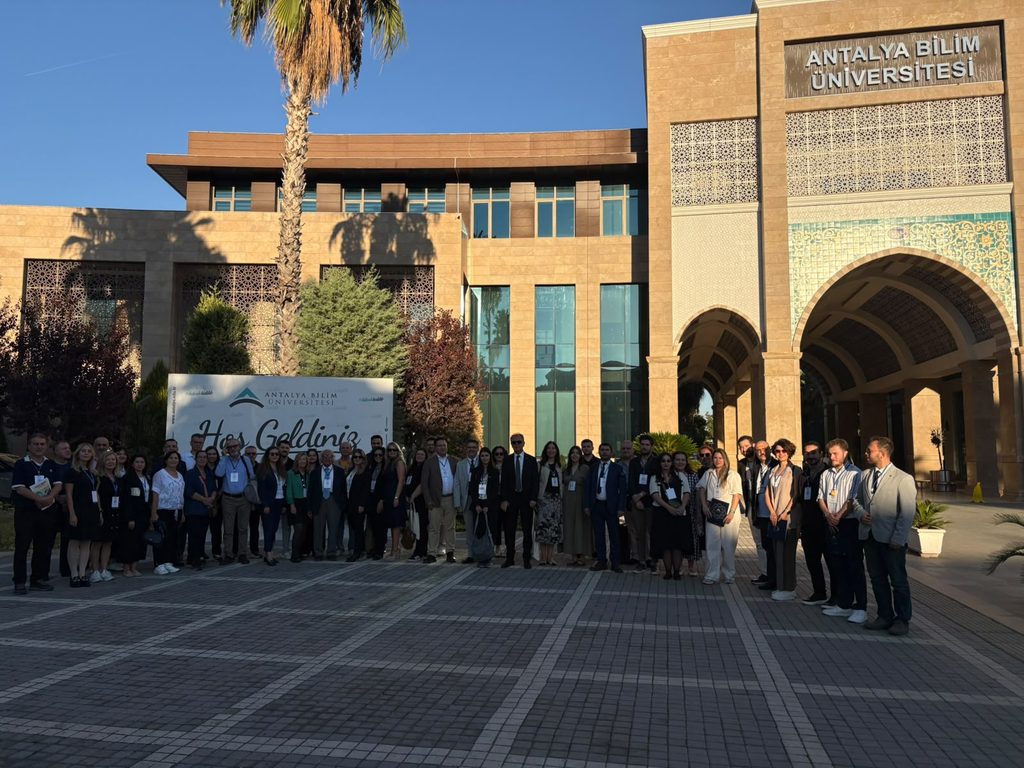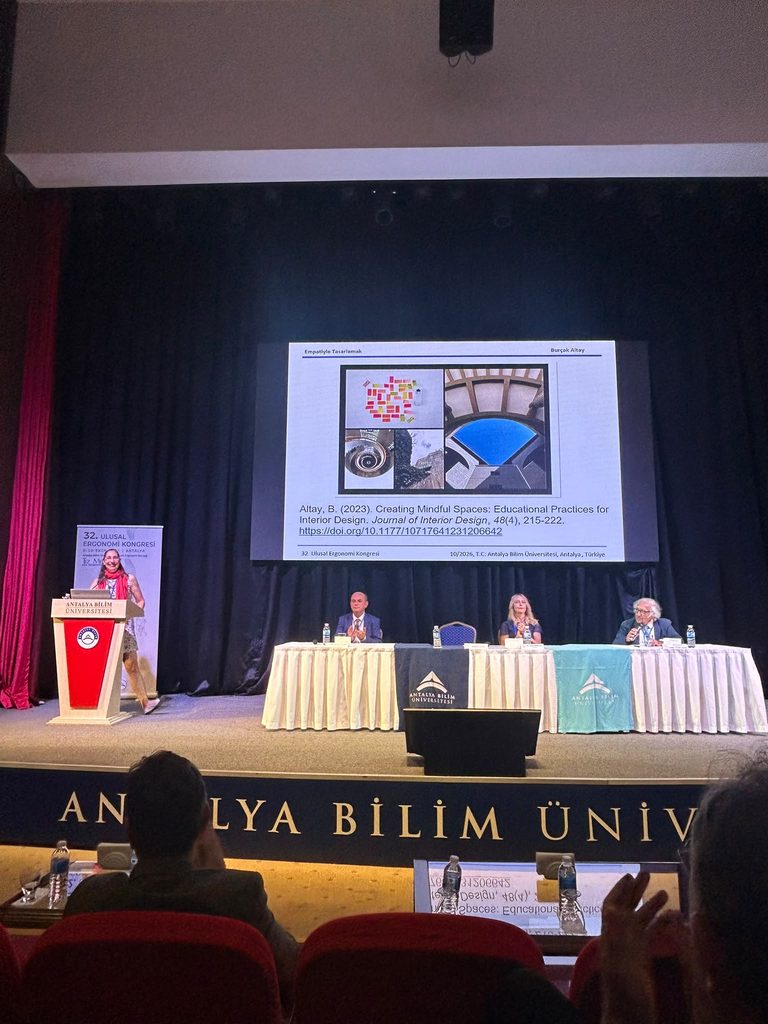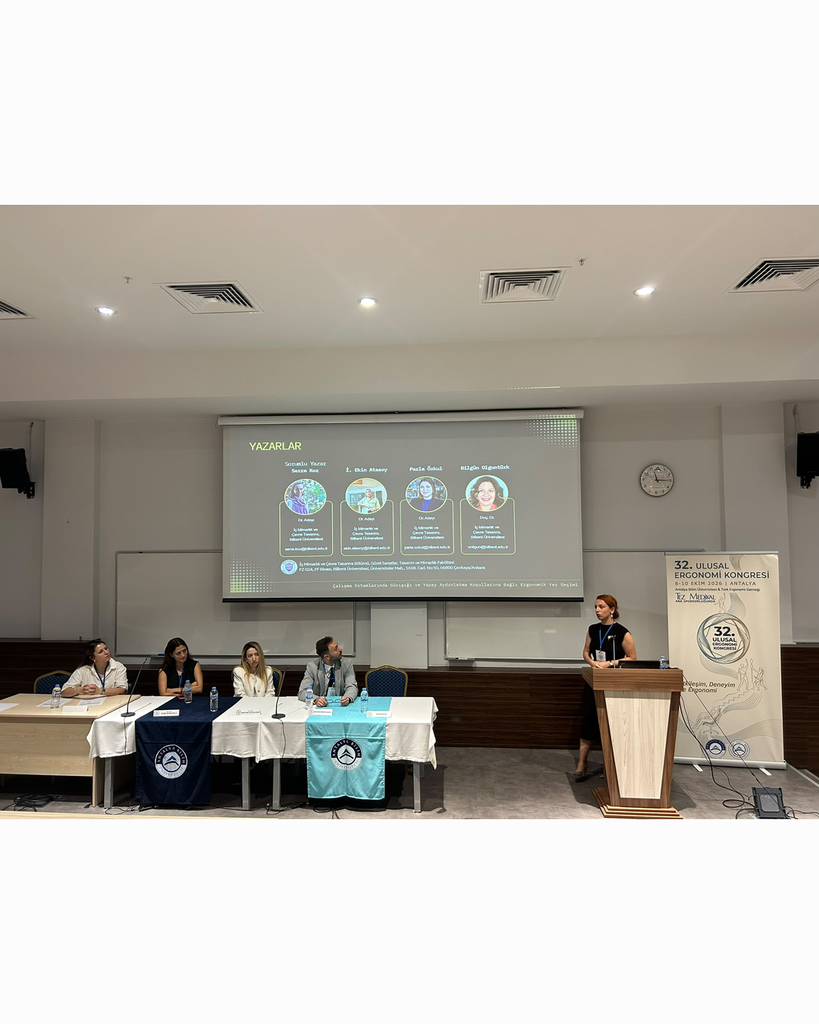
The Department of Interior Architecture and Environmental Design (IAED) at Bilkent University was represented through three presentations at the 32nd National Ergonomics Congress, held in Antalya, Türkiye, on October 8–10, 2026. The presentations addressed a range of topics, including ergonomics, lighting conditions, empathy-driven design, inclusive design, and accessibility.
Asst. Prof. of Practice Dr. Burçak Altay, Acting Chair of the Department, delivered a presentation entitled “Designing with Empathy: Insights from the Ergonomics Course” (Empatiyle Tasarlamak: Ergonomi Dersi Çerçevesinden Kareler). Her presentation highlighted the role of empathy in ergonomics education and design practice. Dr. Altay also chaired the “Inclusive Design and Accessibility” and “Cognitive Ergonomics, Neurodiversity, and Interface Design” sessions held on October 9, 2026.
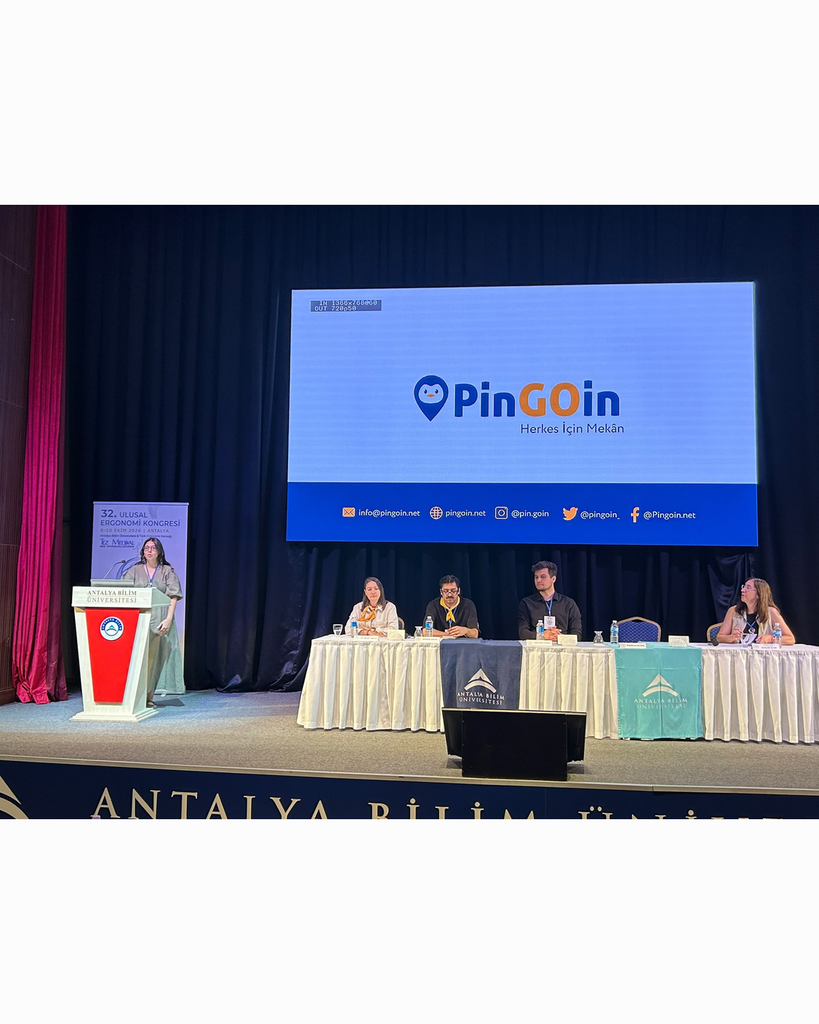
During the session chaired by Dr. Altay, IAED PhD candidate Büşra Altıntepe presented the paper “PinGOin: A Social Enterprise-Based Practice Model for Inclusive Ergonomics and Accessibility” (PinGOin: Kapsayıcı Ergonomi ve Erişilebilirlik İçin Sosyal Girişim Temelli Bir Uygulama Modeli), co-authored with Melike Yüksel and Zeynep Gül Akın. The study examined PinGOin’s activities since 2019 through a retrospective case analysis. Working in the fields of accessibility and inclusive design, PinGOin is a social enterprise that aims to support access to public and cultural spaces for people with different disabilities by providing accessibility information through digital platforms and raising public awareness.
PhD candidates Serra Koz, İrem Ekin Atasoy, and Parla Özkul, together with their academic advisor Assoc. Prof. Dr. Nilgün Olguntürk contributed to the congress with their research entitled “Ergonomic Seating Preferences in Work Environments under Daylight and Artificial Lighting Conditions” (Çalışma Ortamlarında Günışığı ve Yapay Aydınlatma Koşullarına Bağlı Olarak Ergonomik Yer Seçimi). Presented by Serra Koz in a session chaired by Parla Özkul, the study investigated individuals’ seating preferences in screen-based work environments in relation to desk orientation, daylight conditions, and artificial lighting. The presentation attracted considerable audience interest and prompted questions that contributed to a productive academic discussion.
The congress provided an opportunity to share research findings, exchange interdisciplinary perspectives, and engage with academics and professionals working in ergonomics and human-centered design.
We are proud of our researchers and their contributions to the congress. We congratulate all contributors and wish them continued success in their academic and professional endeavors.